







When a central air system runs but the house stays warm, the cause is almost always one of three things: restricted airflow from a clogged filter or blocked vents, a thermostat set or wired wrong, or a refrigerant or component problem inside the equipment. Airflow issues you can often fix yourself. Refrigerant and electrical faults need a technician. Below are the nine reasons we see most often across Berks County, what each one looks like, and which ones you should leave to a pro.
Summer along the Schuylkill Valley gets hot and sticky, and the humidity makes a weak AC feel even worse because the system is fighting to pull moisture out of the air. That is when small problems turn into a house that never quite cools down. Working through this list in order usually points you to the culprit.

Stay Connected
Follow UsA clogged filter is the number one reason an AC runs without cooling, and it is the easiest to rule out. When the filter fills with dust, the blower cannot pull enough air across the cold indoor coil. Rooms feel stuffy, airflow at the vents goes weak, and the trapped cold can even freeze the coil solid. Pull the filter and hold it up to a light. If you cannot see through it, replace it. Most homes need a fresh filter every one to three months, more often with pets or during a hard-running summer. It takes two minutes, and it is the first thing our technicians check on any no-cool call.
Before you assume the worst, walk to the thermostat. It should be set to cool and the fan to auto, not on. With the fan set to on, air keeps blowing between cooling cycles, so the vents feel warm and people think the AC quit. Set the temperature a few degrees below the room reading and listen for the outdoor unit to kick on. A blank or unresponsive screen often just needs fresh batteries. Older units drift out of calibration and can misread the room by several degrees. If new batteries and the right settings do not bring cooling back, the thermostat itself may be failing.
Cool air has to move freely to do its job. Walk the house and check that supply registers are open and clear. Furniture pushed against a vent, a rug covering a floor register, or closed dampers in unused rooms all choke the airflow the system was sized to deliver. Closing vents to force cool air elsewhere usually backfires, because it raises pressure in the ductwork and can freeze the coil or strain the blower. Do not forget the return vents, which pull air back to the system. If those are blocked, the whole system starves for air. Opening things up is free and sometimes fixes an uneven-cooling complaint on its own.
The outdoor unit sheds heat from your home into the air, and it can only do that if the coil can breathe. Over a Berks County summer the fins pack with grass clippings, cottonwood fluff, dryer lint, and dust. When the coil is smothered, the system cannot dump heat, so it runs and runs while the house barely cools and your electric bill climbs. Shut the power off at the disconnect, then gently rinse the unit with a garden hose from the top down. Clear leaves and weeds so there is at least two feet of open space around it. Do not use a pressure washer, which bends the delicate fins. A yearly rinse keeps this from becoming a mid-July problem.
If you see ice on the copper lines or the indoor coil, the system has frozen up and will only blow lukewarm air. Freezing traces back to two things: not enough airflow across the coil, usually from a dirty filter or blocked vents, or a low refrigerant charge. Turn the cooling off but leave the fan running to thaw the ice, which can take a few hours, and replace the filter while you wait. If the coil frosts over again after a fresh filter and open vents, the charge is likely low and you have a leak that needs a technician. Running a frozen system hard can damage the compressor.
Refrigerant is the fluid that actually moves heat out of your home, and a system does not use it up the way a car burns gas. If the charge is low, there is a leak somewhere. Signs include warm air at the vents, hissing or bubbling near the lines, ice on the coil, and cooling that fades over weeks. This is strictly a pro job. Handling refrigerant requires EPA certification and the right tools to find the leak, repair it, and recharge the system correctly. Many older homes still run R-410A equipment while newer systems use the current A2L refrigerants, so the charge and handling depend on what you have. Topping off refrigerant without fixing the leak is a temporary patch, not a repair.
The capacitor is a small part that gives the compressor and fan motors the jolt they need to start and keep spinning. When it weakens, you might hear a hum or a click from the outdoor unit without the fan turning, or the system may start and stall. A dead outdoor fan means the unit cannot shed heat, so the house stays warm even though the indoor blower runs. Capacitors are a common summer failure, worn out by heat and years of cycling. This is not a DIY fix. A charged capacitor holds a dangerous charge even with the power off, and the wrong part can damage the motor. A technician tests it, confirms the motor is sound, and swaps the part safely.
Your AC can make plenty of cold air and still lose it before it reaches you. Ducts running through a hot attic, crawlspace, or basement can leak at the joints, come loose, or get crushed where a run bends, and the cool air escapes into spaces you are not trying to condition. The result is weak airflow at the registers, rooms that never cool evenly, and a system that runs long cycles trying to keep up. You can check accessible ducts for obvious disconnected sections or crushed flex runs. Sealing hidden leaks, though, calls for a technician who can trace the system and measure where the air is going. Tightening up leaky ductwork often recovers a surprising amount of lost cooling.
Sometimes the equipment is simply outmatched. An AC that was undersized for the home, or one that added square footage from a finished attic or addition, will run nonstop on the hottest days and never quite catch up. Age plays in too. Most central systems last around 12 to 15 years, and an aging compressor gradually loses its ability to cool even when everything else checks out. If your AC is over a decade old, struggles every summer, and needs repairs more often, the math starts favoring replacement over another patch. A properly sized new system cools evenly, pulls humidity better, and costs less to run. We measure the actual cooling load rather than swapping in the same size box.
Before you call anyone, a handful of checks are safe and often solve the problem:
These are the same first steps our technicians run through. If the house cools back down, you saved yourself a service call. If it does not, the trouble is deeper in the system and it is time for a pro.
Some problems are not safe or practical to tackle on your own, and pushing a struggling system can turn a repair into a replacement. Call a technician when you run into any of these:
Refrigerant work, electrical faults, and stubborn freeze-ups all call for tools, testing, and certification a homeowner does not have. Our AC repair technicians diagnose the whole system and give you upfront pricing before any work starts. When you cannot wait, call before 6 PM on a weekday and we will work to get someone out for same-day service. Our shop hours are Monday through Friday, 7 AM to 6 PM, and after-hours emergency service is available for an additional fee.
Not every failing AC is worth fixing. The deciding factors are age, the cost of the repair, and how often the system has needed attention. A newer unit with a simple fault, like a capacitor or a thermostat, is almost always worth repairing. But when a system is past a decade old, needs a major part like a compressor, and has been climbing your electric bill every summer, another repair can be money spent on borrowed time.
A good rule of thumb: if the repair costs a large share of what a new system would run and the equipment is near the end of its typical 12-to-15-year life, replacement usually wins over the long haul. A new AC installation cools more evenly, handles humidity better, and runs on far less electricity. We lay out both paths honestly, and financing is available so a sudden failure does not have to wait.
If you have worked through the checks and the house is still warm, the problem is inside the equipment and it is time for a technician. DeLong & Sons HVAC is a family-owned crew in Shoemakersville serving homes across Berks County. Call before 6 PM on a weekday and we will work to get someone to your door the same day, with upfront pricing before any work begins. After-hours emergency service is available for an additional fee. Browse more homeowner guides on our blog.
DeLong & Sons HVAC
403 Franklin St, Shoemakersville, PA 19555
Monday - Friday, 7 AM - 6 PM
Phone: 484-638-2837
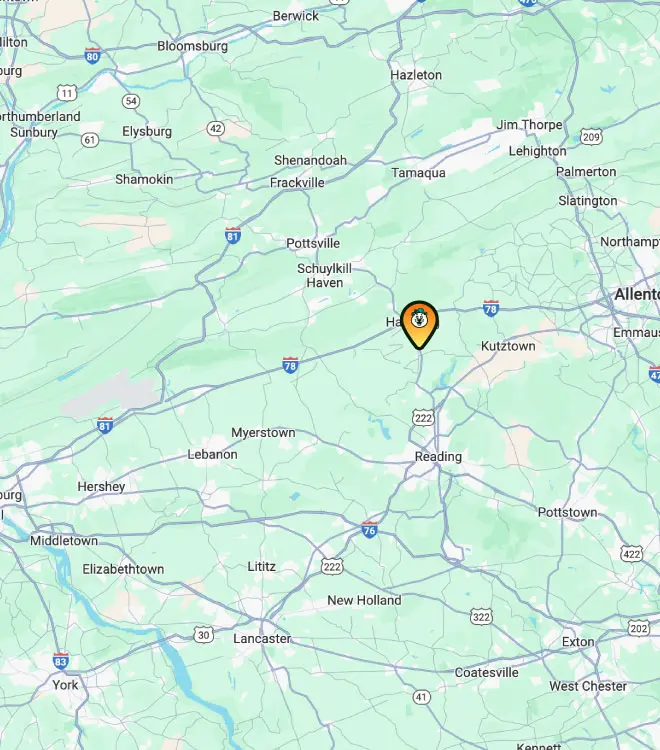
Contact UsLet Our Family Take Care of Your Family! We have over 15 years of experience serving our neighbors in Shoemakersville and Berks County Pennsylvania. We also serve communities across Berks, Lebanon, and Lehigh Counties, including:

© Red Barn Media Group 2026